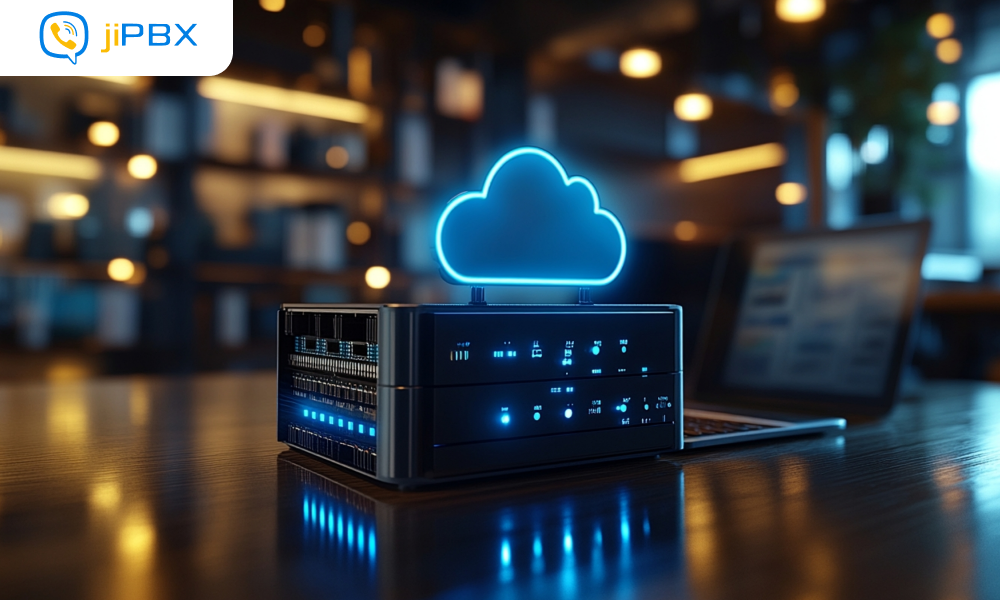
A Cloud-hosted PBX is a virtual phone system that operates via the internet instead of traditional telephone lines. It offers all the features of a conventional PBX, including call routing, voicemail, extensions, and conferencing but without the burden of on-site equipment. Users can access the system through desk phones, softphones, or mobile apps, enabling seamless communication from any location.
According to recent market research, the global cloud PBX market is projected to reach $24.9 billion by 2027, growing at a CAGR of 16.8%, driven by the shift toward remote work, digital transformation, and the need for scalable communication solutions. Businesses adopting cloud-hosted PBX report up to 30% reduction in communication costs and enhanced team collaboration.
Key Highlights
- Cloud-hosted PBX eliminates expensive hardware and maintenance, offering predictable subscription-based pricing.
- Businesses can easily scale up or down, making it ideal for growing teams and multi-office setups.
- Employees can communicate from anywhere via mobile apps or softphones, supporting remote and hybrid work.
- Features like call forwarding, voicemail-to-email, conferencing, and analytics boost productivity and customer satisfaction.
- Modern cloud PBX providers ensure high uptime, encryption, and compliance standards for uninterrupted and safe communication.
Top Benefits of Cloud-Hosted PBX for Modern Businesses
Cloud-hosted PBX solutions are transforming the way businesses communicate, offering advantages that go far beyond traditional phone systems. Here’s why companies are making the switch:
1. Significant Cost Savings
Traditional PBX systems require expensive hardware, installation, and ongoing maintenance. With cloud-hosted PBX, businesses pay a predictable subscription fee, avoiding large upfront costs. This makes it a budget-friendly solution, especially for small and medium-sized enterprises.
2. Scalability and Flexibility
As your business grows, your communication system should keep up. Cloud PBX allows you to add or remove extensions, users, and features instantly without needing additional hardware. This flexibility supports seasonal workforce changes, expansion to new locations, and adapting to evolving business needs.
3. Enhanced Mobility and Remote Access
Modern workplaces are no longer confined to an office. Cloud-hosted PBX enables employees to make and receive calls using mobile apps, softphones, or desktop applications, keeping teams connected from anywhere. This mobility enhances productivity and ensures seamless communication for remote or hybrid work models.
4. Advanced Features for Better Collaboration
Cloud PBX systems come equipped with powerful features such as call forwarding, voicemail-to-email, auto-attendants, conferencing, call analytics, and CRM integrations. These tools streamline communication, improve team collaboration, and enhance customer service.
5. High Reliability and Security
Top cloud PBX providers maintain robust, secure infrastructures with high uptime guarantees. Features like end-to-end encryption, automatic updates, and disaster recovery ensure that business communications remain uninterrupted and protected from potential threats.
6. Simplified Management
Unlike traditional PBX systems, cloud PBX requires minimal IT intervention. Providers manage maintenance, software updates, and security patches, freeing internal IT teams to focus on core business activities.
7. Global Connectivity
Cloud PBX enables businesses to connect multiple offices or remote teams under a single system. International numbers can be added effortlessly, allowing companies to expand globally without heavy infrastructure investments.
Common Myths About Cloud-Hosted PBX
Despite its growing popularity, many businesses are still hesitant to adopt cloud-hosted PBX solutions due to misconceptions. Let us debunk the most common myths and clarify why cloud PBX is a smart choice for modern offices:
Myth 1: Cloud PBX is Unreliable
Many businesses assume that because cloud PBX relies on the internet, it is prone to outages. In reality, reputable cloud PBX providers use highly redundant cloud infrastructure, guaranteeing uptime of 99.99% or higher. They employ multiple data centers, failover systems, and continuous monitoring to ensure uninterrupted service. In many cases, cloud PBX is more reliable than traditional on-premise PBX, which can be vulnerable to hardware failures and local power outages.
Myth 2: Cloud PBX is Not Secure
Security concerns are common when it comes to internet-based solutions. However, cloud-hosted PBX systems are built with strong security protocols, including end-to-end encryption, secure SIP trunking, firewalls, and compliance with regulations like GDPR or HIPAA. Providers also perform regular security audits and updates, protecting sensitive business communications. In fact, cloud PBX can be more secure than traditional phone systems, which often lack advanced protection mechanisms.
Myth 3: Cloud PBX is for Large businesses
Many small or medium businesses assume that cloud PBX is too complex or expensive for them. The truth is the opposite. Cloud PBX is scalable and cost-effective, making it ideal for businesses of all sizes. Small teams can start with basic features and gradually expand as their communication needs grow. With subscription-based pricing, cloud PBX eliminates the need for heavy upfront investments, leveling the playing field for smaller enterprises.
Myth 4: Difficult to set up and manage
Some companies worry that switching to a cloud PBX will require extensive IT expertise. In reality, setup is fast and straightforward. Providers handle configuration, maintenance, updates, and troubleshooting, meaning internal teams don’t need to spend hours managing the system. Employees can often start using the system within hours, with minimal training required.
Myth 5: Features are limited compared to traditional PBX
There’s a misconception that cloud PBX only offers basic calling capabilities. Modern cloud-hosted PBX solutions provide a wide array of advanced features, such as auto-attendants, call analytics, voicemail-to-email, CRM integration, conference calling, call recording, and mobile app support. These features often exceed the capabilities of traditional PBX systems, giving businesses more flexibility and control over their communications.
How to Choose the Right Cloud-Hosted PBX Provider
Choosing the right cloud-hosted PBX provider is a critical decision for any business, as it directly affects communication efficiency, team collaboration, and overall productivity.
1. Identify Your Business Needs
The first step is to clearly identify your business needs. Understanding the number of users or extensions required, the type of features necessary, such as call analytics, CRM integration, or auto-attendants, and whether your team operates remotely or in a hybrid setup will help narrow down potential providers.
2. Evaluate Features and Functionality
You should evaluate the features and functionality offered by each provider. Not all cloud PBX solutions provide the same capabilities, so it’s essential to ensure the system includes tools that align with your workflows. Look for features such as voicemail-to-email, conference calling, auto-attendants, call routing, call recording, and integration with other business applications.
3. Check Scalability and Flexibility
Scalability and flexibility are also crucial when selecting a provider. Your business communication needs may evolve over time, and your PBX system should be able to grow with you. A reliable provider will allow you to easily add or remove users, upgrade features, or expand to new locations without requiring additional infrastructure.
4. Assess Security and Reliability
Security and reliability should never be overlooked. A trusted cloud PBX provider will use advanced security measures such as end-to-end encryption, secure SIP trunking, and compliance with industry standards like GDPR or HIPAA, depending on your business requirements. Additionally, providers should maintain redundant infrastructure and failover mechanisms to ensure continuous service, along with uptime guarantees of 99.99% or higher.
5. Review Support and Customer Service
Customer support and service quality are equally important factors. Even the most advanced PBX system can encounter technical issues, so it is essential to choose a provider that offers responsive, 24/7 support across multiple channels such as phone, email, or live chat. Providers that also offer dedicated onboarding, training resources, and documentation can help ensure a smooth setup and minimize downtime, allowing your team to adapt quickly to the new system.
6. Compare Pricing and Plans
Pricing and cost transparency should also guide your decision. While the cheapest option is not always the best, it’s important to select a provider whose subscription plans are clear, predictable, and aligned with your budget. Look for providers that avoid hidden setup, cancellation, or maintenance fees, and that offer optional add-ons you might need in the future.
7. Test With a Trial or Demo
Take advantage of trials or demos whenever possible. Experiencing the system firsthand allows you to evaluate usability, test features, assess responsiveness, and gather feedback from your team.
8. Read Reviews and Case Studies
Reviewing customer testimonials, case studies, and online reviews can provide valuable insight into real-world performance, user satisfaction, and the reliability of support services. These steps combined will help you choose a cloud-hosted PBX provider that not only meets your current communication needs but also supports your business as it grows and evolves.
Use Cases: Why Businesses are Switching to Cloud-Hosted PBX
Here are the use cases that illustrate why businesses across industries are adopting cloud-hosted PBX solutions, to stay agile, reduce costs, support modern work models, and deliver better experiences to customers and employees.
1. Supporting Remote and Hybrid Workforces
As remote and hybrid work becomes the norm, businesses need communication systems that move with their teams. Cloud-hosted PBX enables employees to make and receive calls from anywhere, whether they are working from home, on the go, or at multiple offices. This flexibility ensures teams stay connected without relying on physical hardware or office-based phone lines.
2. Streamlining Multi-Location Communication
Organizations with multiple branches or offices often face challenges in integrating communication systems. Cloud PBX solves this by centralizing phone services into one unified platform. Staff across different locations can share extensions, transfer calls seamlessly, and access the same system features regardless of geography, eliminating silos and improving internal collaboration.
3. Enhancing Customer Support Operations
Customer service teams benefit significantly from cloud-hosted PBX. Advanced features like automated call distribution, interactive voice response (IVR), call queuing, and call analytics make it easier to manage high call volumes and reduce wait times. With tools like call recording and reporting, businesses can train agents better, ensure quality control, and monitor customer interactions for continuous improvement.
4. Scaling for Business Growth
Growing companies often outgrow their traditional phone systems quickly. Adding new lines, extensions, or offices usually involves costly hardware upgrades. With cloud PBX, organizations can scale effortlessly adding users, numbers, or features instantly through a provider’s dashboard. This makes expansion faster and more cost-effective.
5. Supporting Global Teams
Cloud-hosted PBX enables businesses to have local numbers in multiple countries without installing physical phone infrastructure worldwide. This helps international teams communicate more efficiently and allows companies to present a local presence in global markets. Clients benefit from easier access, and businesses can enhance global reach without additional telecom costs.
6. Reducing Operational
Traditional PBX systems require on-site servers, maintenance, and dedicated IT resources. Cloud-hosted PBX shifts all of this responsibility to the provider, removing infrastructure headaches. Providers handle software updates, security patches, backups, and reliability, freeing up internal IT teams to focus on strategic initiatives rather than managing phone systems.
Conclusion
Cloud-Hosted PBX solutions are redefining how modern businesses communicate, collaborate, and grow. From cost efficiency and scalability to enhanced mobility and advanced communication features, cloud PBX has become an essential tool for organizations aiming to stay competitive in a digital-first world. As businesses continue to embrace remote work, global expansion, and customer-centric operations, having a reliable and flexible communication system is no longer optional - it’s a necessity.
At jiPBX, we specialize in delivering secure, scalable, and feature-rich cloud-hosted PBX solutions tailored to meet diverse business needs. Our advanced communication systems are designed to ensure high uptime, seamless integration, and enterprise-grade security. Whether you are a startup, SME, or large enterprise, jiPBX Technologies empowers your organization with modern communication tools that drive productivity, enhance customer experiences, and support long-term growth.
Frequently Asked Questions
1. What is a Cloud-Hosted PBX system?
A Cloud-Hosted PBX is a virtual phone system that operates over the internet instead of traditional telephone lines. It allows businesses to manage calls, voicemail, extensions, and conferencing without maintaining physical hardware on-site.
2. Is Cloud-Hosted PBX suitable for small businesses?
Yes, Cloud-Hosted PBX is highly scalable and cost-effective, making it ideal for small and medium-sized businesses. Companies can start with basic features and expand as their communication needs grow.
3. How secure is a Cloud-Hosted PBX solution?
Reputable providers use advanced security measures such as encryption, secure data centers, regular updates, and compliance standards to ensure that business communications remain protected.
4. Can employees use Cloud-Hosted PBX while working remotely?
Yes, employees can access the system through mobile apps, softphones, or desktop devices, allowing them to make and receive calls from anywhere with an internet connection.
5. How long does it take to implement a Cloud-Hosted PBX system?
Implementation is typically quick and straightforward. Depending on the size and complexity of the organization, setup can take anywhere from a few hours to a few days, with minimal disruption to ongoing operations.









Share this post on: